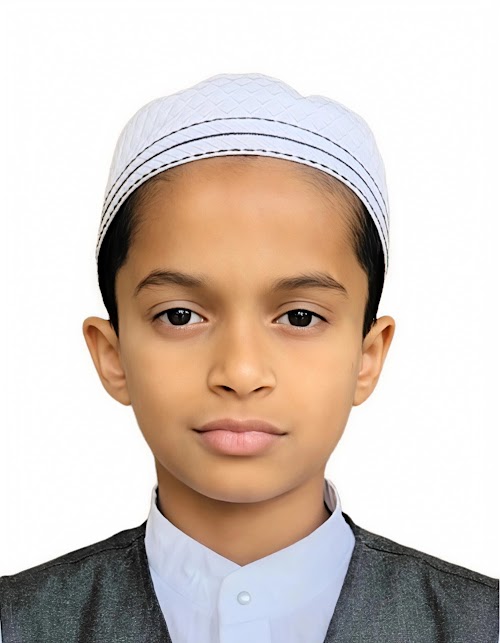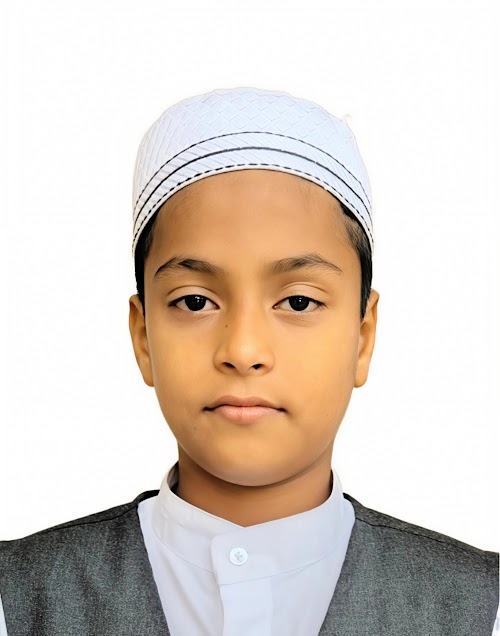
Chief judge
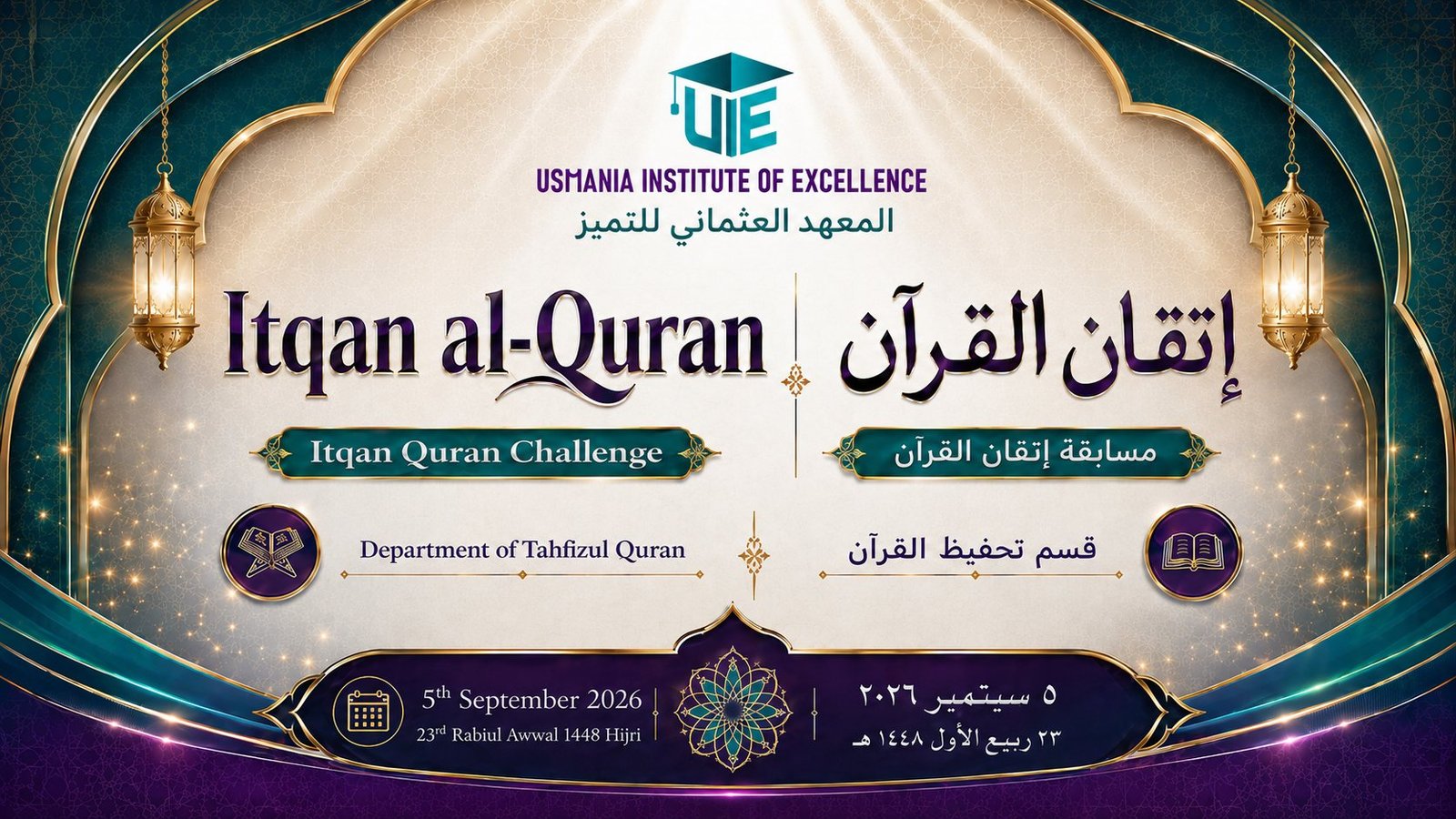
ITQAN Quran Challenge
- Date
- 05 September 2026
- Venue
- Usmania Institute of Excellence
- Status
- Completed
Organised by Usmania Institute of Excellence · Department of Tahfeez ul Quran
Overview
Usmania Institute of Excellence — Department of Tahfeez ul Quran
Programme
- 09:00
ITQAN QURAN CHALLENGE
Team
Question Master
Moulana Md Junaid Al-Azhari
Hafiz, Aalim, BA, MA, MPHIL
Judge
Moulana Faraz Zaki
Judge
Moulana Mukarram Ali
Chief guests
Honoured guests presiding over the programme
Moulana Dr Mohammed Ozair AlAzhari Nadwi
Hafiz, Aalim, PhD
Moulana Mohammed Arshad AlAzhari Nadwi
Hafiz, Aalim, BA, MS
Shujath Ali Khan
B.Com, M.Com
Mohammed Ghufran Baig
BSc, MSc Physics
Keynote speakers
Delivers the closing address
Moulana Mursaleen Ahmad Nadwi
Department coordination
Leads the Department of Tahfeez ul Quran
Mufti Syed Izhar ul Hasan Qasmi
Department of Tahfeez ul Quran
Hafiz, Aalim, Mufti
Class teachers
The ustaadh who prepared each class
Qari Shahzad Alam Rahmani
Hifz A
Hafiz & Qari
Qari Md Luqman
Hifz B
Hafiz, Aalim & Qari
Qari Mohammed Nawaz
Hifz C
Hafiz & Qari
Programme hosts
Students who compère the programme
Mohammed Affan
Mohammed Raqeeb
Sadaqathullah Sharieff
Aatif Aslam
Musab Hussain
Mohammed Tahir
Qhalis Samith
Categories
Juz 1 & 2
Juz 1 & 2
Assessed on memorisation, tajweed and fluency.
1st, 2nd and 3rd prize
Juz 29 & 30
Juz 29 & 30
Assessed on memorisation, tajweed and fluency.
1st prize only — a single winner
Rules
Every recitation is assessed against the same elements and marked live by the panel, independently by each judge.
Maximum score
50
Every participant begins with 50 marks. Judges do not enter marks manually. Only applicable deductions are recorded.
Final Score = 50 − Total Deductions
No single question may lose more than 15 marks, and a contestant’s final mark is the average of their three.
الدرجة الكلية
50
يبدأ كل متسابق برصيد 50 درجة. لا يقوم الحكام بادخال الدرجات يدويا، وانما يتم تسجيل الخصومات المستحقة فقط.
الدرجة النهائية = 50 − مجموع الخصومات
لا يخصم من السؤال الواحد اكثر من 15 درجة، والدرجة النهائية للمتسابق هي معدل اسئلته الثلاثة.
Deductions الخصومات
Hesitation التردد
−0.5 per occurrence
An unintended memory-related pause while trying to remember the next word or verse, after which the participant continues without assistance from the judge. Normal stopping for breath or a valid Qur’anic waqf must not be counted as hesitation.
هو توقف غير مقصود بسبب محاولة تذكر الكلمة او الاية التالية، ثم يواصل المتسابق القراءة من غير مساعدة من القاضي. ولا يعتبر الوقف الطبيعي للتنفس او الوقف الصحيح في التلاوة ترددا.
Self Correction التصحيح الذاتي
−0.5 per occurrence
The participant makes a mistake and corrects it independently before any intervention from the judge.
هو ان يخطئ المتسابق ثم يصحح خطأه بنفسه قبل تدخل القاضي.
Judge Correction / Prompt تصحيح القاضي
−1 per occurrence
The participant is unable to continue correctly and the judge has to intervene by correcting the recitation or supplying a word or phrase to enable the participant to continue.
هو ان يتدخل القاضي لتصحيح القراءة او لتلقين المتسابق كلمة او عبارة حتى يتمكن من المتابعة.
Major Memorisation Mistake خطأ كبير في الحفظ
−1 per occurrence
A significant memorisation error such as reciting from the wrong place, skipping a phrase, mixing a similar ayah, adding an incorrect phrase, or moving into an incorrect sequence.
هو خطأ ظاهر في الحفظ، مثل الانتقال الى موضع غير صحيح، او اسقاط عبارة، او خلط اية باية مشابهة، او اضافة عبارة غير صحيحة، او الوقوع في تسلسل خاطئ.
Minor Tajweed Error خطأ تجويدي يسير
−0.5 per occurrence
A minor error in the application of Tajweed that affects the quality of recitation but does not constitute a serious pronunciation error — for example Madd, Ghunnah, Qalqalah, Ikhfa, Idgham, Tafkhim or Tarqiq.
هو خطأ خفيف في احكام التجويد يؤثر في جودة التلاوة، لكنه لا يعد خطأ كبيرا في النطق.
Major Tajweed Error خطأ تجويدي كبير
−1 per occurrence
A clear and serious Tajweed or pronunciation error, such as an incorrect makhraj, incorrect letter pronunciation, a serious vowel error, or another major pronunciation mistake.
هو خطأ واضح وكبير في التجويد او النطق، مثل الخطأ في المخرج، او نطق الحرف بصورة غير صحيحة، او الخطأ الواضح في الحركة او اللفظ.
If a question fails تعثر السؤال
Each participant answers three questions. Only one of these may apply to any one question.
Major Breakdown تعثر كبير
−5
The participant begins the assigned passage but suffers a major breakdown and is unable to complete a substantial portion correctly.
هو ان يبدأ المتسابق الاجابة ثم يتعثر تعثرا كبيرا فلا يتمكن من اكمال جزء مهم من المطلوب بصورة صحيحة.
Partial Question Failure فشل جزئي في السؤال
−10
The participant attempts the question but is unable to correctly complete a major portion of the assigned passage.
هو ان يحاول المتسابق الاجابة، لكنه لا يتمكن من اكمال معظم السؤال بصورة صحيحة او يعجز عن جزء كبير منه.
Question Not Answered عدم الاجابة على السؤال
−15
The participant is unable to meaningfully answer the assigned question.
هو ان يعجز المتسابق عن الاجابة على السؤال المقرر عجزا بينا، وعندها تخصم 15 درجة لذلك السؤال.
Overall Performance & Melody الاداء وحسن النغمة
Evaluated once, on the participant’s complete recitation.
يتم تقييم الاداء وحسن النغمة مرة واحدة بناء على التلاوة الكاملة للمتسابق.
Excellent
ممتاز
−0
Very Good
جيد جدا
−1
Good
جيد
−2
Average
متوسط
−3
Weak
ضعيف
−4
Very Weak
ضعيف جدا
−5
One mistake, one deduction الخطأ الواحد وخصم واحد
A single mistake should normally receive only one primary deduction classification. The same incident must not be unnecessarily deducted twice under multiple categories.
If the student makes a mistake and corrects it independently, record Self Correction. Do not record both Self Correction and Judge Correction for the same incident.
When a question-failure deduction is selected, avoid adding ordinary deductions for the same failed portion of the question if that would punish the same failure twice.
الاصل ان الخطأ الواحد لا يسجل له اكثر من نوع خصم واحد، ولا ينبغي احتساب الواقعة نفسها تحت اكثر من بند اذا كان ذلك يؤدي الى تكرار الخصم على الخطأ نفسه.
فاذا اخطأ المتسابق ثم صحح خطأه بنفسه، فيسجل التصحيح الذاتي فقط، ولا تسجل الواقعة نفسها على انها تصحيح ذاتي وتصحيح من القاضي في الوقت نفسه.
وعند تطبيق خصم تعثر السؤال او الفشل الجزئي او عدم الاجابة، يجب تجنب تكرار الخصم على الجزء نفسه من السؤال.
Questions
Each participant is set their questions in advance, every one a fixed range of ayahs from a chosen surah. The same verses are shown on the broadcast, with the juz and page number, as they are recited.
Prizes
Juz 1 & 2
Juz 1 & 2
1st, 2nd and 3rd prize
Juz 29 & 30
Juz 29 & 30
1st prize only — a single winner
Each recitation is marked independently by every judge, and the marking procedure is explained publicly before any contestant recites. Results are final once published by the Main Controller.
Participants
19 participants, by competition number.
Juz 1 & 2 · 15
- 1Mohammed Yusuf-Ur-Rahaman Hussain
- 2Hamdur Rahman
- 3Mohammed Sulaiman
- 4Mohammed Yaseer Khan
- 5Mohammed Hussain
- 6Mohammed Raheel Ur Rahman Hussain
- 7Baqir Mohammed
- 8Mohammed Saad
- 9Syed Shah Faris
- 10Syed Maahin
- 11Syed Maaz Ahmed
- 12Mohammed Taseer Khan
- 13Mohammed Eshaan Khan
- 14Umarulla Khan
- 15Syed Muawiyah
Juz 29 & 30 · 4
- 16Syed Khuzaima Abdullah
- 17Mohammed Ismail Khan
- 18Mohammed Ayan Alam
- 19Saad Khan
Presentations
Presented during the programme, outside the competition.
Naat
Mohammed Afnan
GCC 2
Watch the presentation
Results
Juz 1 & 2 · 1st
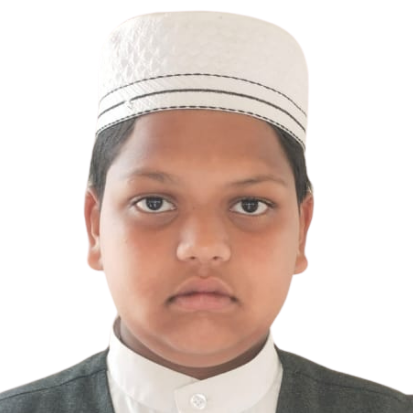
Mohammed Yaseer Khan
Competition no. 4
Juz 1 & 2 · 2nd
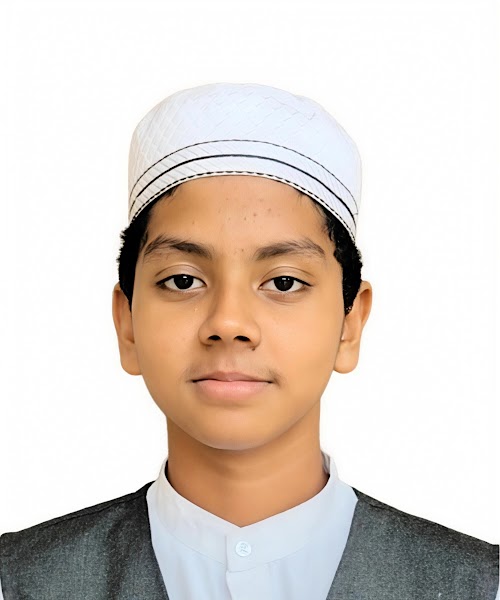
Baqir Mohammed
Competition no. 7
Juz 1 & 2 · 3rd

Umarulla Khan
Competition no. 14
Juz 29 & 30 · 1st

Mohammed Ayan Alam
Competition no. 18
Juz 1 & 2· other participants
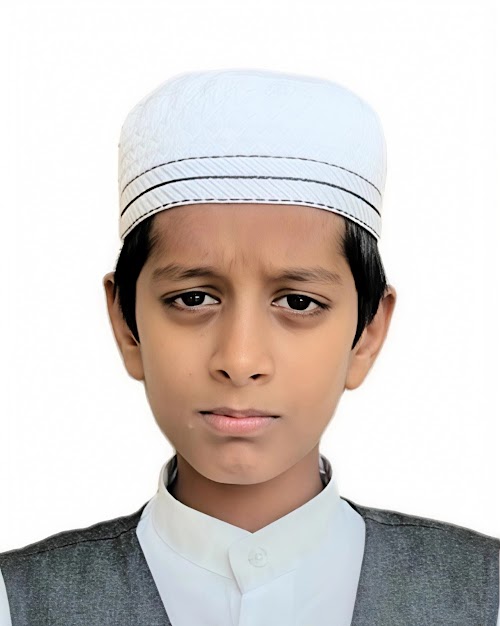
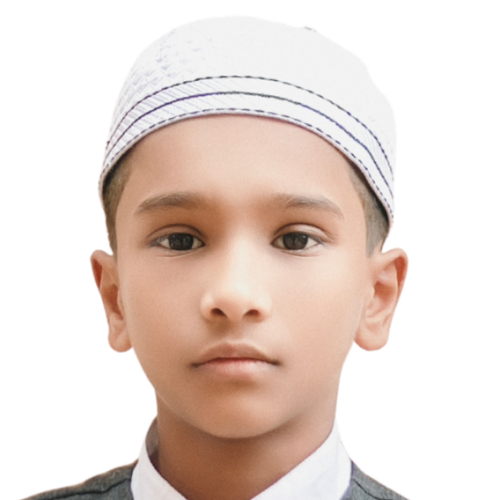
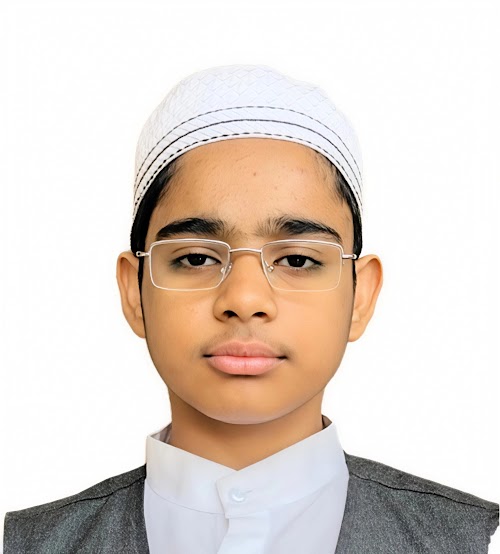


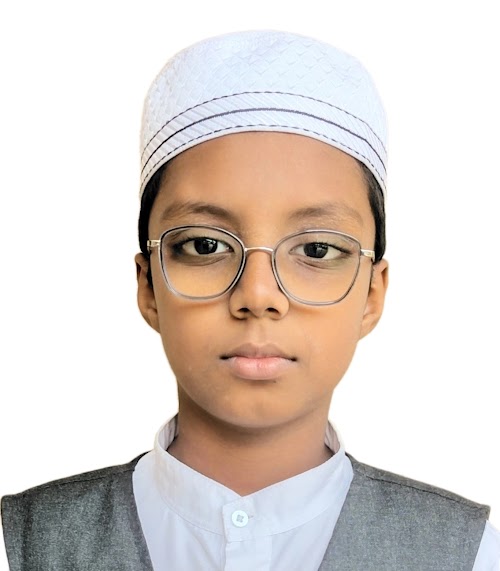
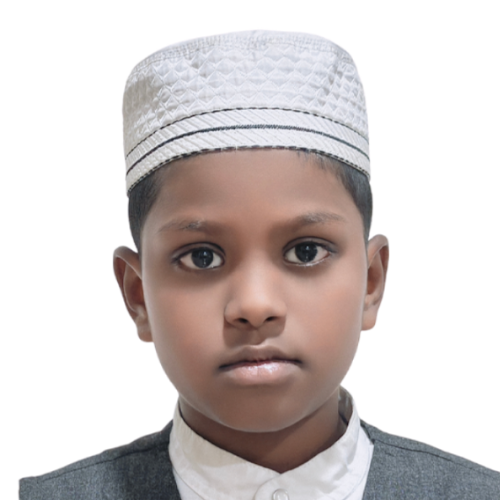

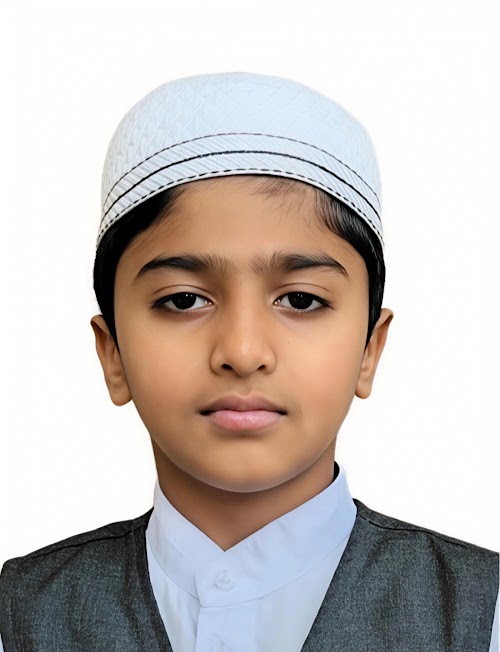
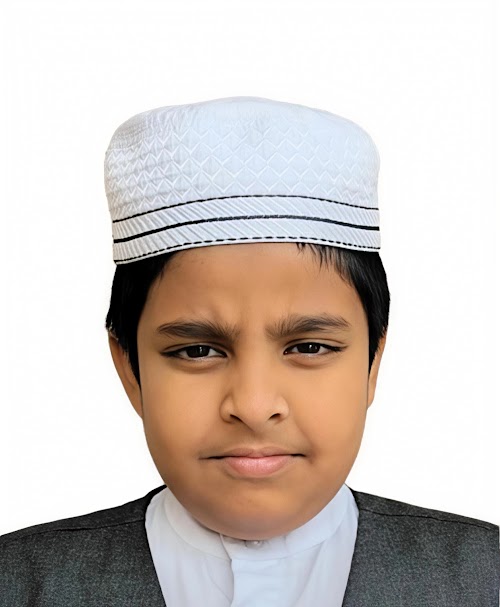
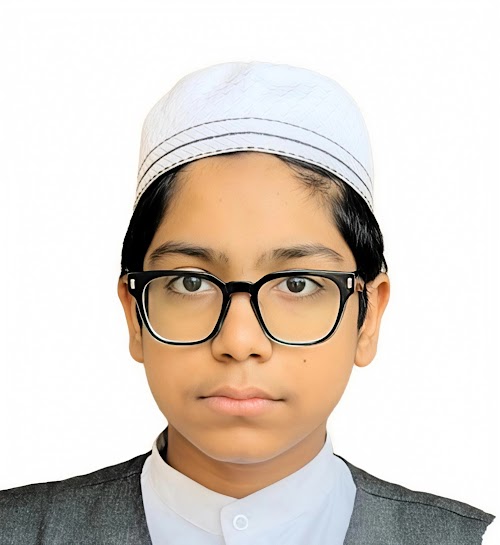

13th
Mohammed Raheel Ur Rahman Hussain
No. 6